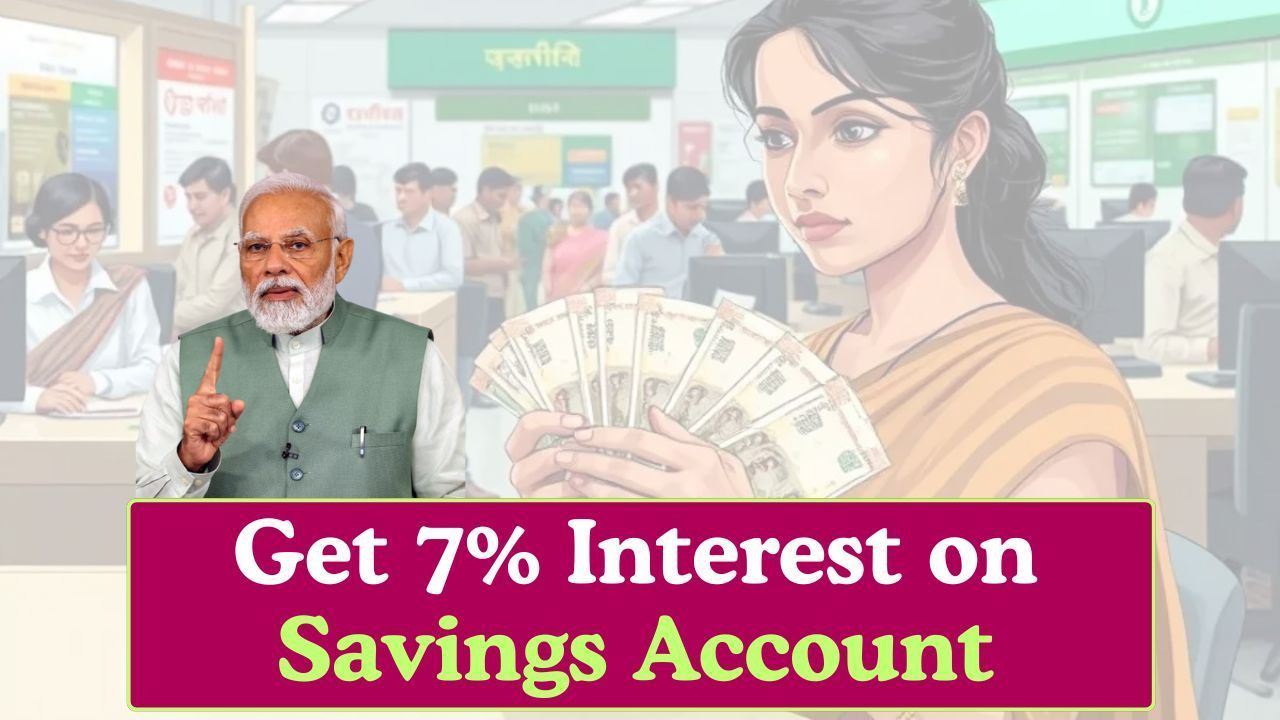
In 2026, an Indian Bank has now tied the mantle with a reading of 7% fixed in its savings account. Nevertheless, not all Indian banks are paying out at that rate: only a few, and banks with a highly specific type of account structure are making it possible to earn even at this rate, and customers who meet the terms will benefit more from inflating their balances.
Why are the Banks Now Offering Higher interest on Savings Accounts in 2026?
Banks are trying to customize to higher competition by struggling against mutual funds, e-wallets, and miscellaneous small schemes and therefore masculine kind of infinite opportunities to foster deposits.
Higher rates of interest are now given by means of retention, with big private and small finance banks are of course more or less trying to ensure that there are no leavers, thereby helping them steal their assets from fixed deposits.

Have 7% Interest on Savings Accounts Been Offered To All?
The savings interest rate of 7 % is in no condition equal or constant for all their balances for all the consumers. This interest rate is typically on offer in a slab configuration, with the higher amounts offered at better interest rates. Some banks link a higher interest rate with internet use, salary accounts, or a zero-branch banking model to lower operational expenditure.
How Savings Interest Slabs Operate in 2026
In our day, many banks operate a tiered system, where the interest increases with the account balance. If one’s account is small, he earns a normal rate; if it gets big, he will get a premium rate.
- Account Balance Range Standard Interest Rates (From 2026)
- Up to ₹1 lakh 2.5-3%
- ₹1 lakh-₹5 lakh 4-5%
- ₹5 lakh-₹10 lakh 5.5-6%
- Above ₹10 lakh Up to 7%
- Rates vary with different banks and are also subject to periodic changes.
Which account will provide maximization in returns?
Interest payment accounts with a higher rate are usually public with private sector banks, small finance banks, and digital-only banks. Comparatively, salary accounts, superior savings versions, and digital-first accounts are likely to demand higher interest rates relative to the simple savings versions offered.
The Top Conditions To Be Met
To qualify for the maximum rate, customers typically need to maintain a minimum monthly balance, use banking facilities digitally, and have salary credits set up. Some banks require the account holder to make a certain number of debit card or UPI transactions each month to be eligible for a bonus to their interest.
Is a High-Interest Savings Account Safe Enough?
Savings accounts are generally deemed very secure. This is mostly because deposits are covered by deposit insurance, which means that they are far safer in comparison to market-linked investments. The safety of a high-interest savings account is best guaranteed if the bank’s regulation and license are valid.
How Would You Compare That to Fixed Deposits?
Discussing fixed deposit accounts, withdrawal blockers, and competitive interest rates, we have to analyze functionalities and approaches to investment options-some of which are related to emergencies or investment directly.

It is not far-fetched to earn 7% interest on a savings account anymore in 2026; rather, there is a particular bank one should choose and certain considerations camp be met. Canny savers should find a convenient way right now to increase their idle money without losing their right to access and safety.