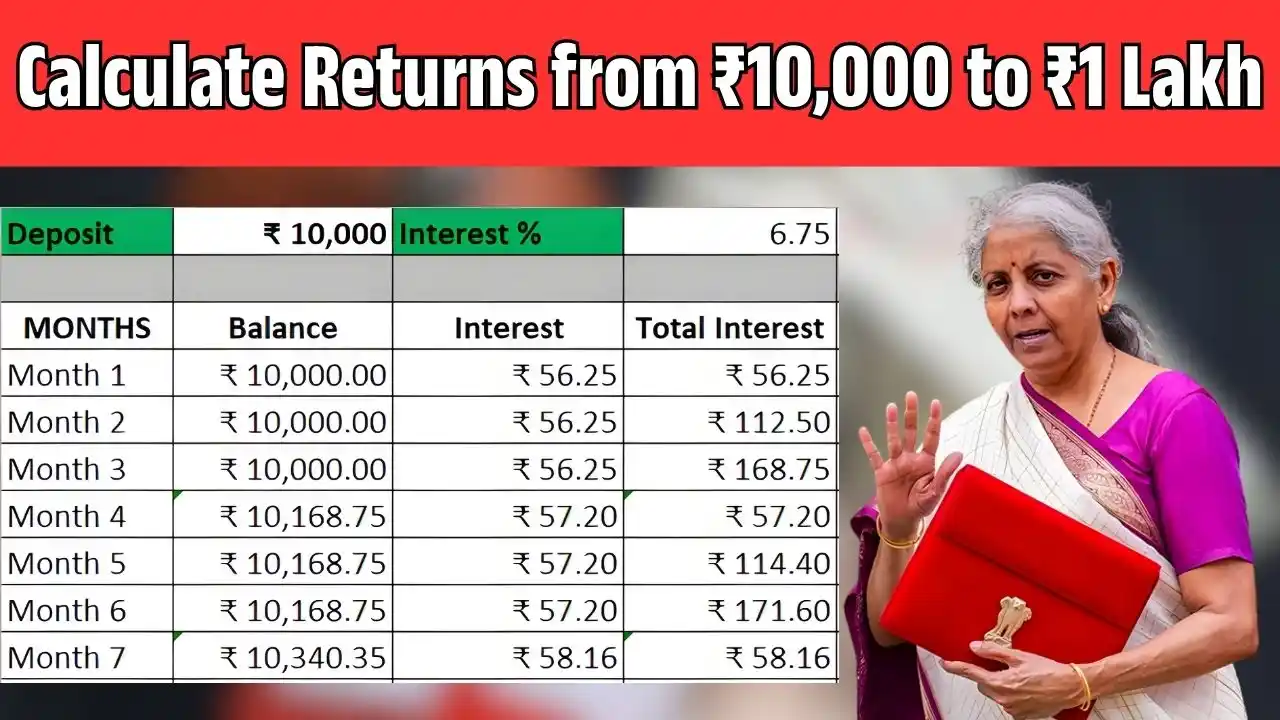
There are many instances of dreams by investors; one very common one is wishing to grow one lakh from ten thousand. Though it sounds highly ambitious, achieving this is quite possible. It will take time, patience, and the magic of splitting returns. Speed of progress depends on the rate of return and investment horizon.
Why Compounding Is an Ally
Return on your original sum of money and on all the returns being developed by that time is compounding. In the beginning, one may feel very agonizingly slow, but over time, it becomes a snowballing effect on its investment. This is what makes long-term investing become the real power: not the small-term gains.

How Long for Different Interest Rates to Take?
At the rate of 8 percent annually, ₹10,000 gradually grows to ₹1 lakh. However, it requires almost 30 years to do that. At 10 percent, the duration of time was brought to about 24 years. A 12 percent annual increase, such as for a long-term market-oriented investment, will bring ₹1 lakh in about 21 years.

The higher the return, the faster the goal is achieved. An investment of 15 percent annually is expected to reach ₹1 lakh in around 17 years, whereas returns of 18 percent would almost get to ₹1 lakh in about 14 years. Examples like these show even a small increase in returns can make great difference with time.

Lump Sum vs Regular Investment Approach
If one decided to make a one-time investment of ₹10,000, it might take the test of his!!! or her patience. In this regard, regular monthly investments would get him/her to the goal much quicker. By keeping up the monthly contributions in lesser amounts vis-à-vis a huge single investment, total contributions increase and compounding starts working at an earlier stage. Such an approach offers comfort to the salaried individuals and beginners.
In Conclusion: A (Wealth-)Growth Process; Taking INR 10,000 to 1 INR Lakh. This is a fruit of planning and start early, persist, and stay for time. success comes with discipline and consistency, whichever mode you have for your investments-whether singletime or SIP.